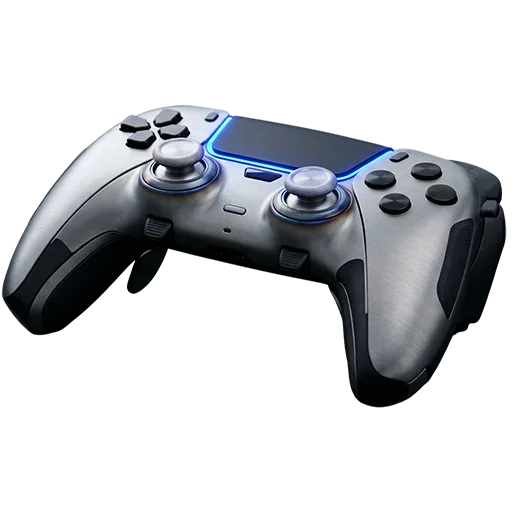
Vita3K Manager
Plays PS Vita games on the console with Vita3K, an open-source PS Vita emulator. The app installs the Vita3K build pinned for this version of the app, installs the PS Vita's firmware and your games through it, and adds the games to Steam, so they start from Game Mode like any other game.
Whether a game runs, and how well, is up to Vita3K. Its compatibility list shows what others found. Vita3K compatibility and performance vary by title and are not guaranteed on PlayStation 5 hardware running Bazzite.
What you need
- Your games, dumped from your own PS Vita: a
.vpkor.zip, a.pkgwith its zRIF license key, or a dumped game folder. The app never downloads games. Supply firmware and game files that you are entitled to use. -
The PS Vita's firmware, the PS Vita's system software. Vita3K needs it, and its font package, to start most games. The app cannot ship them; each is a file named
PSP2UPDAT.PUP:- the firmware: download it here (official page);
- the font package: download it here (Sony's file);
- optional, the preinstalled apps: download them here (Sony's file).
Then put the files in
~/Games/Vita/Firmware: the app gives them to Vita3K by itself (see Firmware below). - Steam, started at least once, for Game Mode. - About 86 MB for Vita3K itself. Its settings go in~/.config/Vita3K, the PS Vita's storage (firmware, installed games, saves) in~/.local/share/Vita3K/Vita3K. - fusermount (FUSE), which Bazzite has. Vita3K comes as an AppImage, which mounts itself with it. Without it, it unpacks itself to a temporary folder on every start, which takes longer.
Install
Install it from the portal (the Gaming tab), or from a checkout of the repository:
apps/vita3k/install.sh                         # the app, its launcher, a menu entry and a Desktop icon
apps/vita3k/install.sh --no-desktop-shortcut   # without the Desktop icon
apps/vita3k/install.sh --uninstall             # remove it; --purge removes its settings and log too
The launcher is ~/.local/bin/ps5-vita3k-manager; the app runs on the suite's shared Python environment. Installing
needs no root: run it as your own user. Vita3K itself is not part of the install: the app downloads it when you
press Install.
Removing the app takes out the app and the Vita3K it installed; Vita3K's own folders (the firmware, your games, your
saves and settings) stay. The games in Steam then no longer start: take them out first by unticking them and
pressing Update Steam. With --uninstall --purge the app's settings, the covers found on SteamGridDB and the
log go too.
Use it
The header shows the Vita3K version (its build number), the Firmware (Ready, Partly or —), Your games (the games installed) and those Available in Steam. Refresh reads everything again. Beside the title stands the app's state: Not installed, No firmware, No games or Ready. Under the introduction, which links to Vita3K's release notes and to this wiki, a row of three pills does the setting up, each with what it is for on top and what it does under it: Vita3K Install, Vita3K Uninstall and Games Install. Three lines below the pills say where each stands, and then come three tabs: Your games, Settings and Log, and Start game, a tab that is a button.
- Vita3K: Not installed. or Installed., with the button to use under it. The tooltip says which build is installed, or what Install takes, and when a newer build is out. Install asks first, then downloads Vita3K from GitHub (about 86 MB) and checks it against the checksum pinned in this version of the app before installing it; a file that differs is not installed. When another build is installed, the tooltip and the log say so, and Install puts the pinned one in. Uninstall takes it out again; Vita3K's own folders, with the firmware, your games, saves and settings, stay.
- Firmware: Installed once Vita3K has the system software and the font package, Not installed until
then, and under it each part by name: the system software, the font package and the preinstalled apps (optional).
The i beside them says where the files go and links to where each is downloaded. Put the
PSP2UPDAT.PUPfiles you downloaded in~/Games/Vita/Firmware(each in a folder of its own there if you like, since Sony names all three the same): once Vita3K is installed, the app gives them to Vita3K by itself, the largest first, one after the other, when the window opens and on Refresh; the line under the tabs then says which part each was. A file is given once as it is, also one Vita3K could not use; a file you replace is given again. The files stay in the folder. -
Game folder: the app's own folder,
~/Games/Vita, and a removable drive'sGames/Vita; the i beside them says what goes there, and the tooltip how many games Vita3K has installed. Games Install installs one of yours, once Vita3K is installed; its window opens in that folder:- From a file: a
.vpkor.zipis handed to Vita3K, which installs it and then starts it in its own window; a.pkgasks for the game's zRIF license key, and Vita3K installs it without a window. - From a dumped folder: Vita3K installs the folder's game and starts it in its own window.
The list shows the game once it is installed.
- From a file: a
Press Escape or the controller's B/back button to close the active window or dialog.
Your games
The table lists every game Vita3K has installed: its title and ID (PCSB…, PCSE…) from the game's own files, its
version and its folder in Vita3K's storage (ux0/app).
Remove game… deletes the chosen game from the disk. A window first lists what would go, a row each with its size: the game in Vita3K's storage, its update and extra content when they are there, and its Steam shortcut when it is in Steam. Every row is ticked; untick what you want to keep, then Delete marked; Cancel deletes nothing. The saves stay. Close Vita3K first: nothing is removed while it runs.
Vita3K settings opens Vita3K's own window, with its other settings, its controls and its game list. A game runs from Steam: Start game starts the chosen one there.
Game updates and extra content
Install an update or extra content (DLC) as a game: Games Install with its .pkg and zRIF key. Vita3K puts an
update in ux0/patch and extra content in ux0/addcont, and uses them when it starts the game. The table lists the
game once.
Steam
Tick the games you want in Steam and press Update Steam. The app adds them to Steam as non-Steam games, with
the game's own icon and LiveArea picture as their pictures and its icon (icon0.png) as the logo on the banner,
and takes out the games you unticked and games no longer installed. Steam keeps these files in memory, so it closes
for the change and starts again in the background. Vita3K has to be installed first: the games in Steam start it.
In Steam each game's name starts with its system, for example [PS Vita] Gravity Rush, so it stands apart from the same title on Steam or on another system in Steam's menus. Two games with the same title get their ID after the name.
The games are in the library under Non-Steam, on the desktop, in Big Picture Mode and in Game Mode alike. They start the game alone in Vita3K, full screen, and Vita3K quits when the game ends. Steam's menu and Exit game work as for any game.
Steam's overlay works over a game started from Steam, in Game Mode and on the desktop: press Shift+Tab or the PS button for the game's page, its controller layout and its settings, without leaving the game.
A game started from Steam reads your controllers itself. How it works explains both.
Change Steam from Desktop Mode: in Game Mode Steam is the session itself and cannot close for the change. Update Steam is off there, and until Steam has been started once on the console.
Covers
A PS Vita game has no cover in the shape Steam's library uses, so the app draws one: the game's icon with its title on
a dark background. With a SteamGridDB API key, entered under Steam artwork…, Update Steam looks each game up
on SteamGridDB by its title and takes a cover from there instead; the background and the logo on the game's page
stay the game's own. The key is free with a SteamGridDB account, and it is one key for every app of the suite, kept
in ~/.config/bazzite-console/steamgriddb-key. Leave the field empty to look nothing up: the covers already found
stay in use.
Steam in the line under the table is a link: it opens Steam's library (Steam starts when it does not run).
Start game
The last tab, Start game, is a button. Choose a game in the table and click it: the game starts through Steam, as its shortcut in Steam starts it, and Steam starts first when it does not run. The tab you were on stays open. A game that is not in Steam yet is not started: the line under the tabs says to tick it and press Update Steam first.
Settings
Vita3K's settings that matter for playing, each written into Vita3K's own settings file (config.yml) the moment
you change it. A game's own settings in Vita3K come before these; everything else is in Vita3K's own window
(Vita3K settings, under the games).
- Picture: the Renderer (Vulkan; OpenGL helps only a game that fails with Vulkan), the Resolution (a multiple of the PS Vita's 960 × 544: 2x fills a 1080p screen sharply; a higher one asks more of the GPU), the Screen filter (Bilinear smooth, Nearest sharp pixels, Bicubic sharper, FXAA smooths edges, FidelityFX Super Resolution with Vulkan only), Anisotropic filtering, Fill the screen (the picture stretched to the whole screen; off, the PS Vita's shape with borders) and VSync.
- Speed: High accuracy (draws more exactly, for a game that shows errors; slower), Compile shaders in the background (the game goes on while Vita3K compiles, with a stutter less), the FPS hack (may double a 30 FPS game to 60, but makes some run twice as fast), the Performance overlay (the frames per second over the game) and the Shader compilation message.
- Sound: the Volume, the Sound output (SDL, Vita3K's own choice, or Cubeb when the sound crackles) and NGS sound (the PS Vita's sound engine; off, many games are silent, for one that hangs on it).
- System: the Confirm button (Cross as on a PS Vita sold outside Japan, Circle as in Japan) and the Language of the PS Vita, which a game with that language shows.
Each setting shows what Vita3K's settings file holds, or Vita3K's own default while the file does not name it; a value set in Vita3K that the app does not offer is shown as it is. Nothing is written while Vita3K runs: Vita3K writes its settings back when it closes, over any change.
Log
Everything the app said and did, with the time: Vita3K installed or removed, what the app set up in Vita3K, the
firmware files given to Vita3K, the games installed or deleted, every change to Steam, and every error. The same
lines are in ~/.local/share/ps5-vita3k-manager/ps5-vita3k-manager.log, which turns over at 1 MB (the three
older files are kept). The log holds what the app did, with your home folder written as ~, and not your
SteamGridDB key. install.sh --uninstall keeps it; --purge removes it.
From a terminal
ps5-vita3k-run starts the installed Vita3K with the options you give it. The Steam shortcuts use it, so they keep
working when a newer version of the app brings a newer Vita3K.
ps5-vita3k-run --frontend sdl -r PCSB00245                   # a game alone, by its ID; Vita3K quits with it
ps5-vita3k-run --firmware "/path/to/PSP2UPDAT.PUP"           # install a part of the firmware
ps5-vita3k-run --pkg "/path/to/game.pkg" --zrif KO5i...      # install a game from its package and license
ps5-vita3k-run "/path/to/game.vpk"                           # install a game and start it
ps5-vita3k-run                                               # Vita3K's own window
New Vita3K builds
Vita3K has no stable releases: it publishes a new build for almost every change, numbered over its whole history (4269). Each version of the app installs one build, the one pinned in it. When the window opens, the app asks GitHub for Vita3K's newest build. When that one is newer, the Vita3K line's tooltip and the log say so, with a link to what is new; the app does not install it. A newer Vita3K comes with a newer version of the app, from the portal: after updating the app, the tooltip and the log say so, and Install brings it.
Vita3K's own window (Vita3K settings) would look for a newer build when it opens; the app turns that check off in Vita3K's settings, with Vita3K's welcome window (see below). The AppImage Vita3K comes in can update itself, but the app starts Vita3K with that turned off. Should Vita3K have been updated all the same, the Vita3K line's tooltip says so, and Install puts the pinned build back.
How it works
The Steam shortcuts start ps5-vita3k-run, which starts Vita3K with its plain game window: the game alone, and
Vita3K quits with it, so Steam sees the game end. Two things change when Steam is the one that starts it. Started
from outside Steam (Vita3K settings, or ps5-vita3k-run in a terminal), Vita3K runs as it is.
Once Vita3K is installed, each time the window opens and while Vita3K does not run, the app sets two lines of
Vita3K's settings (config.yml in its settings folder): its welcome window off, which would wait for a click
before a game, and its own update check off, which could replace the pinned build. Everything else in the file
stays as Vita3K wrote it, and what changed goes to the log.
The app goes online for three things: the download of Vita3K from GitHub when you press Install, the question to GitHub for Vita3K's newest build when the window opens, and, only with a SteamGridDB key, the covers from SteamGridDB on Update Steam. The firmware links open in your browser. Privacy has the whole suite's list.
Controllers
When Steam starts a game, it tells the game's controller library (SDL) to ignore the controllers Steam handles itself, and gives the game Steam's virtual controller in their place (Steam Input). Vita3K then sees only that virtual controller: it has no motion sensors or touchpad, and on the desktop it follows the layout Steam has active, which may be Steam's desktop layout (mouse and keys).
So the run wrapper undoes it: while a real controller is connected, Vita3K reads that controller itself and leaves
Steam's virtual one (USB ID 28DE:11FF) out. The PS button stays Steam's. Without a real controller, where the only
controls are Steam's virtual controller, the wrapper leaves Steam's choice as it is. The buttons are set in Vita3K's
own window (Vita3K settings, then Controls).
Steam's overlay on the desktop
The KDE desktop of Bazzite is a Wayland session. Vita3K opens its windows through Wayland when it can, but Steam on the desktop only sees windows that go through X11 (XWayland, the X11 server within the Wayland session). A game window Steam cannot see has no overlay: Shift+Tab and the PS button do nothing.
So when Steam starts a game on the Wayland desktop, the run wrapper has Vita3K open its windows through XWayland
(SDL_VIDEO_DRIVER=x11, and QT_QPA_PLATFORM=xcb for its own window), and Steam's overlay works as in any other
game. Game Mode runs every game through X11 already.
What goes where
| What | Where |
|---|---|
| The app | ~/.local/share/ps5-vita3k-manager/app |
| Vita3K | ~/.local/share/ps5-vita3k-manager/emulator |
| The firmware files you put there, and your games to install | ~/Games/Vita/Firmware and ~/Games/Vita (the app's own folder) |
| Vita3K's settings | ~/.config/Vita3K (Vita3K's own folder) |
| The PS Vita's storage: firmware, installed games, saves | ~/.local/share/Vita3K/Vita3K (Vita3K's own folder) |
| The app's settings | ~/.config/ps5-vita3k-manager |
| The app's log | ~/.local/share/ps5-vita3k-manager/ps5-vita3k-manager.log |
| The Steam shortcuts | Steam's shortcuts.vdf and grid folder, per Steam user |
| The covers found on SteamGridDB | ~/.local/share/ps5-vita3k-manager/covers |
| The SteamGridDB key, one for the suite | ~/.config/bazzite-console/steamgriddb-key |
| Launchers | ~/.local/bin/ps5-vita3k-manager, ~/.local/bin/ps5-vita3k-run |
Vita3K can keep its storage elsewhere (its Settings, the storage folder); the app reads where it is.
License
GPL-3.0-or-later, see LICENSE. Vita3K is a separate program under its own license (GPL-2.0), downloaded from its own release.